How Components and Rules Participate in Product Generation

Fan Mihua
Cross-domain Designer

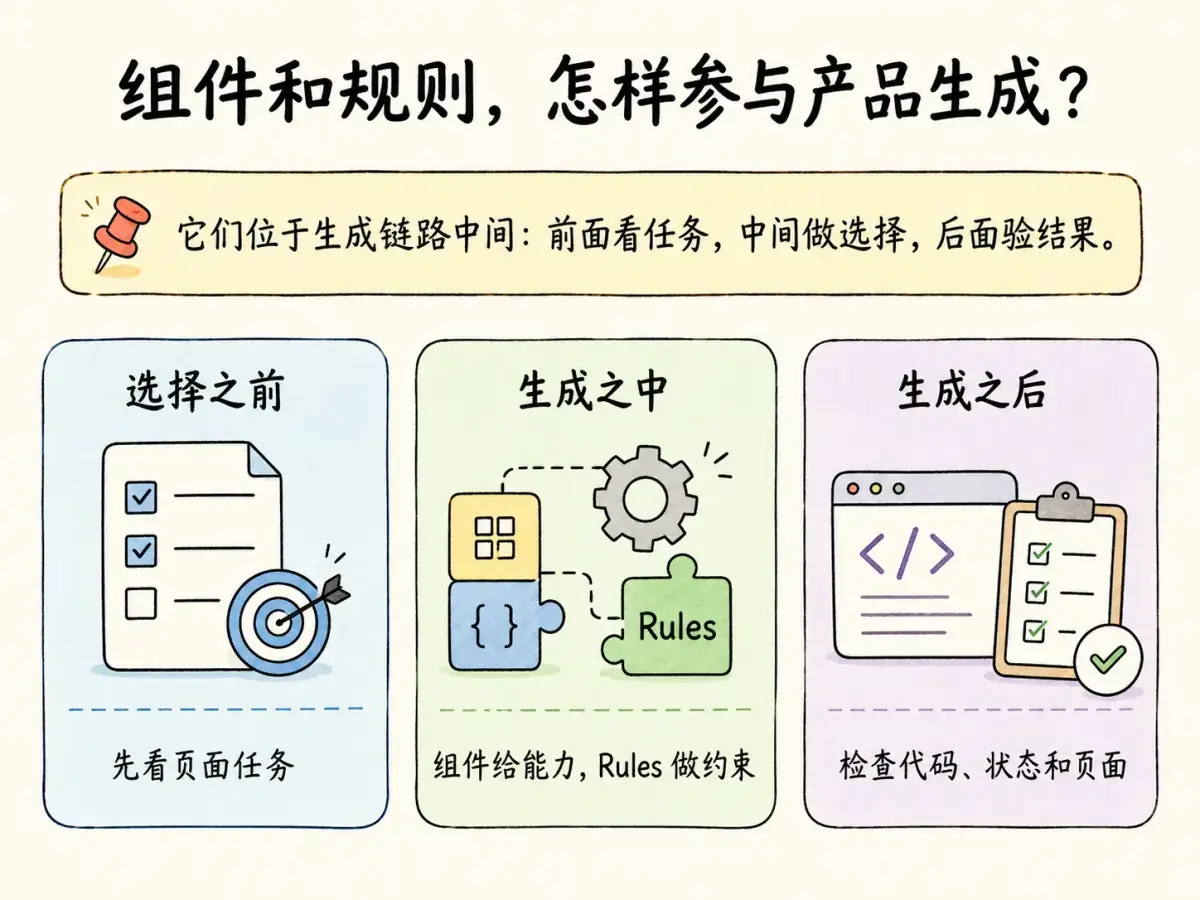
Hi, I’m Fan Mihua. This article explains how AI selects components from a page task, follows project rules, implements real code, and verifies the final result.
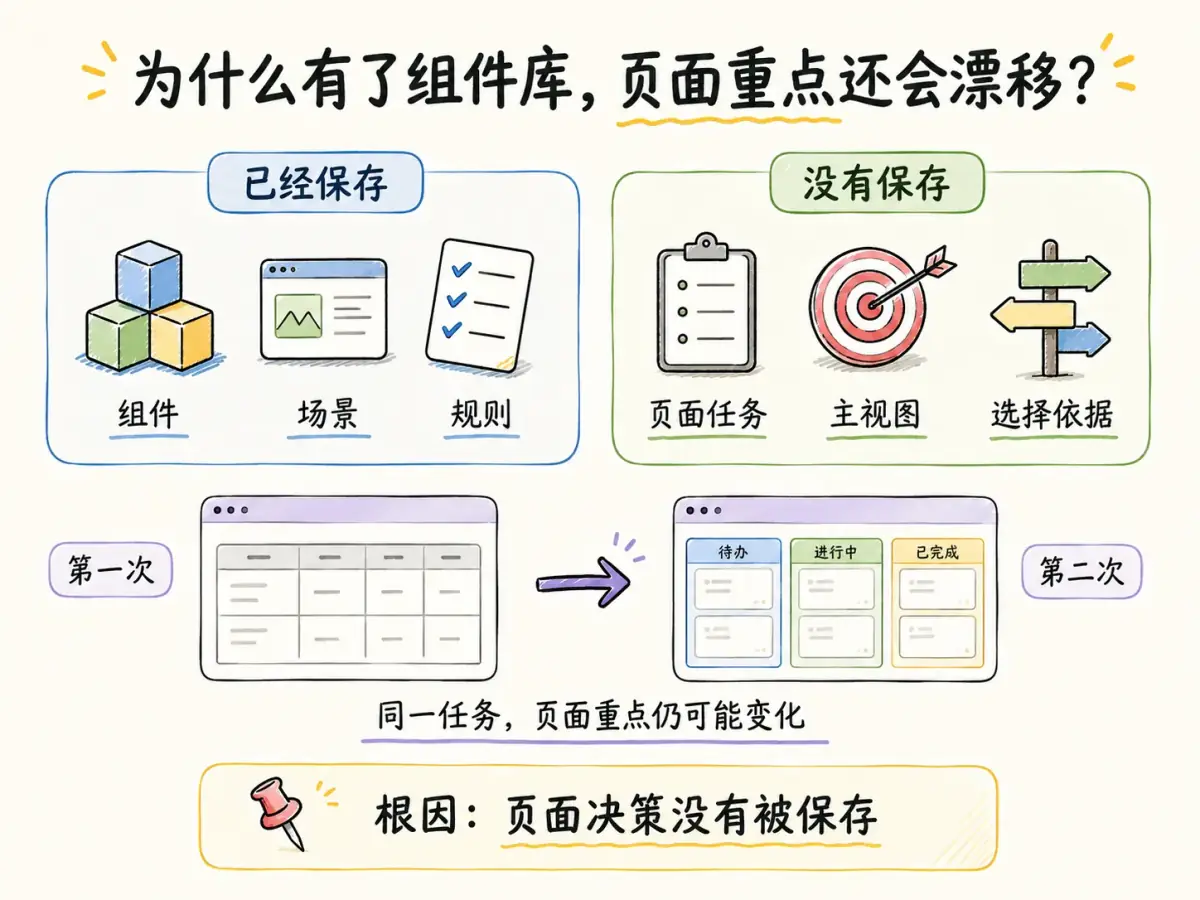
Why can generation still drift with a component library?
A component library records what exists, and rules record how to use it. They do not automatically preserve the page’s primary task, visual hierarchy, or the reason behind a specific choice.
Start component selection from the page task
For an opportunity page, a kanban can own the progression task while a table remains a supporting high-density view. The task determines the structure before a concrete component is selected.
Turn a one-time choice into a stable decision
A machine-readable page contract preserves the primary task, primary and supporting views, critical actions, failure feedback, and acceptance checks. Implementations may change without losing the product decision.
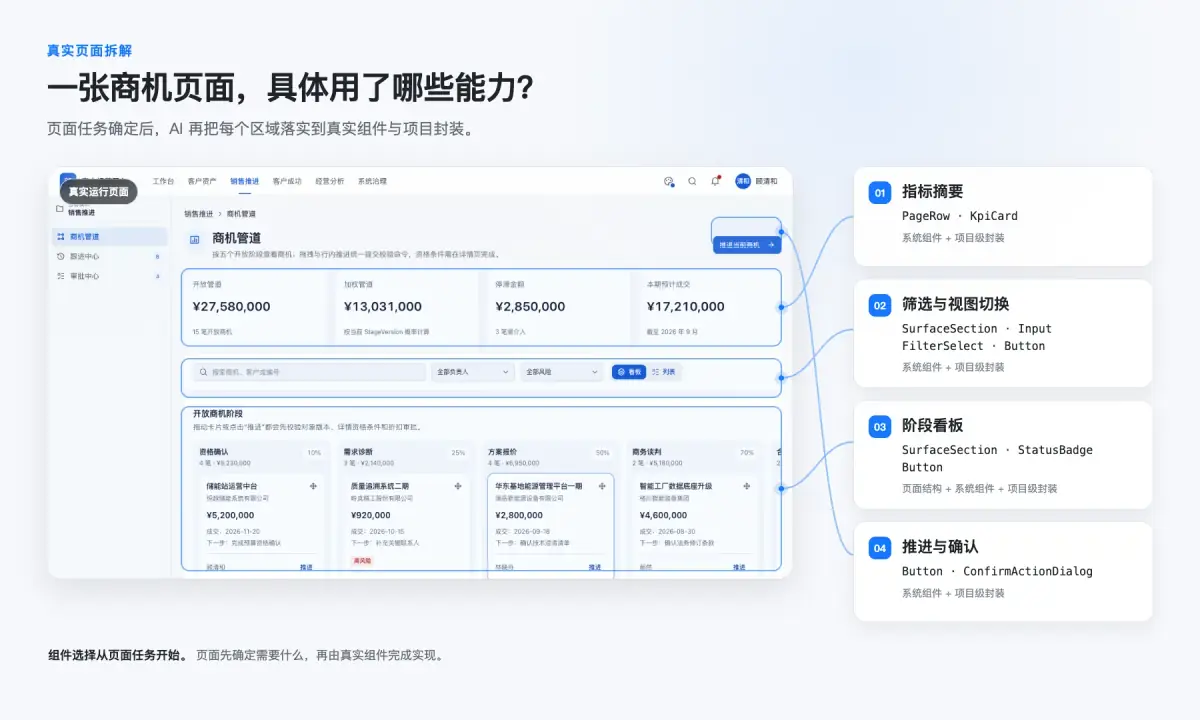
Connect decisions to real components
| Page responsibility | Implementation | Source |
|---|---|---|
| Layout and business regions | PageRow, SurfaceSection | System components |
| Metrics and status | KpiCard, StatusBadge | Project composition |
| Filtering and dense lists | FilterSelect, DataTable | Project composition |
| Progression and confirmation | Button, ConfirmActionDialog | System + project composition |
Verify the generated result
| Check | What must be true |
|---|---|
| Provenance | Every component is allowed and traceable |
| Structure | The primary and supporting views still match the task |
| Interaction state | Actions bind to real data and failures have recovery |
| Runtime result | The page opens, operates, responds, and completes the task |
Components and rules become reliable only when the system can explain where they came from, why they were selected, and whether the running product satisfies the original task.