Why AI Still Misses the Mark When Rebuilding a Figma Design

Fan Mihua
Cross-domain Designer

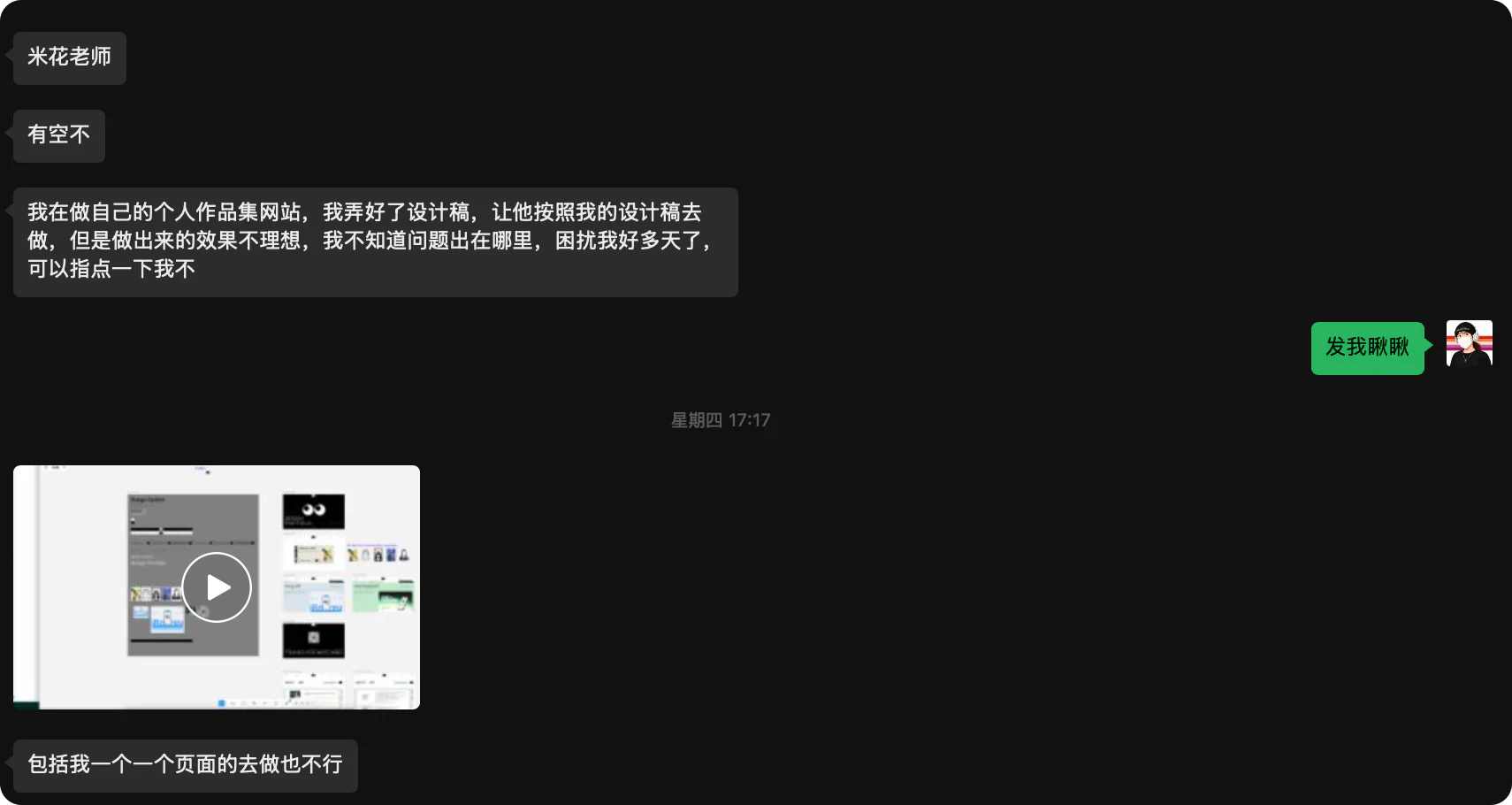
A designer came to me after repeatedly asking AI to rebuild a portfolio from a finished Figma design. The pages worked, but the result still felt unlike the original. This 1:1 session focused on finding the missing information between the design file and the generated code.
01 | The question
Why was the implementation still wrong when the design was already complete?
The issue was not a single broken component or framework choice. The AI could see screenshots and produce code, but it could not reliably infer the intended layout structure, component states, motion, and page relationships from an unstructured design file.
02 | What I found
Visual similarity does not provide implementation intent
A polished frame shows the final appearance, but it may not explain which elements belong together, how a component changes state, or which dimensions and interactions must remain consistent across pages.
The handoff context was incomplete
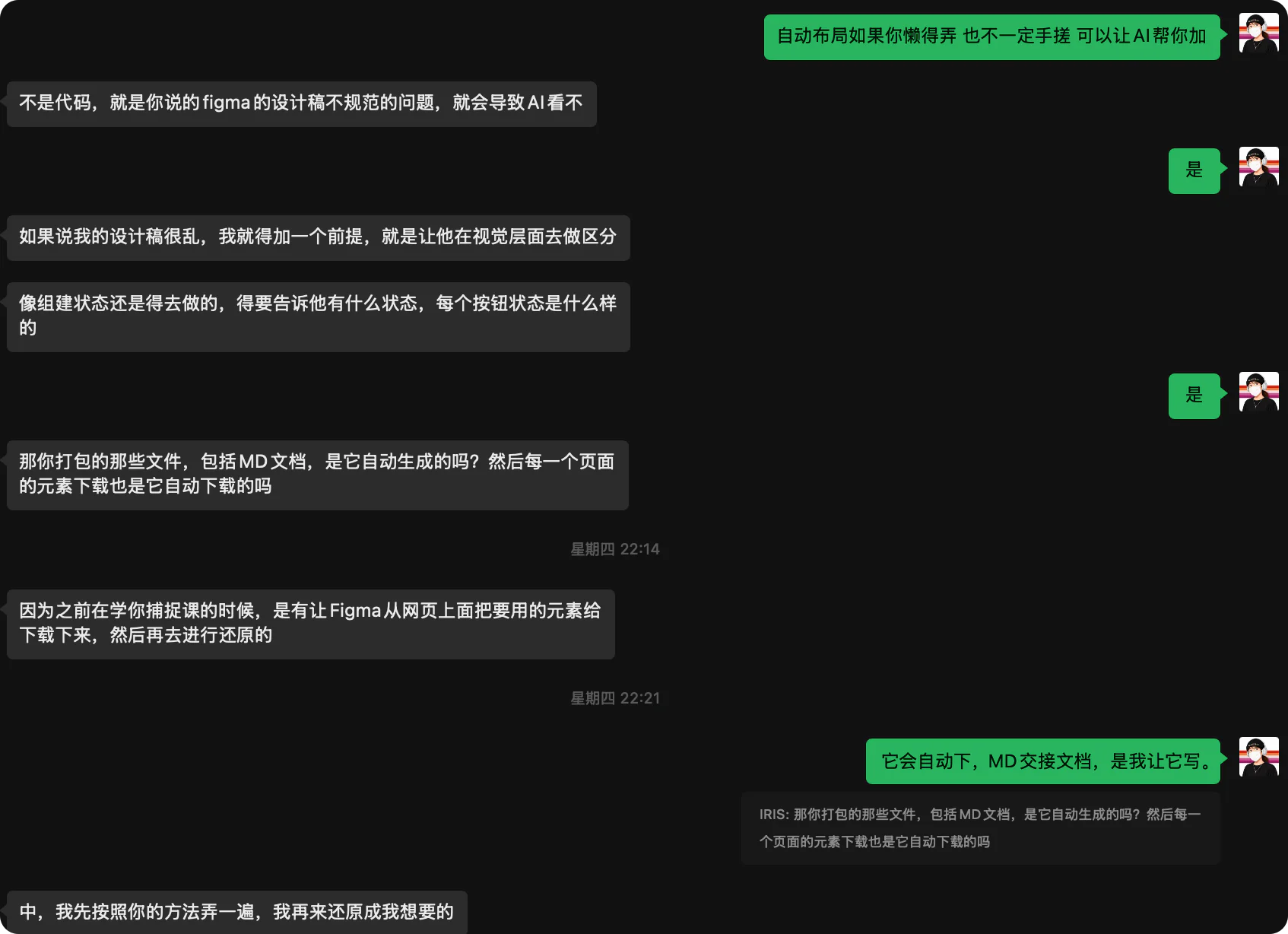
The design needed clearer auto layout, component boundaries, named states, shared assets, and a short handoff document. These signals help AI read the design as a system instead of treating every screen as an isolated image.
03 | How we worked through it
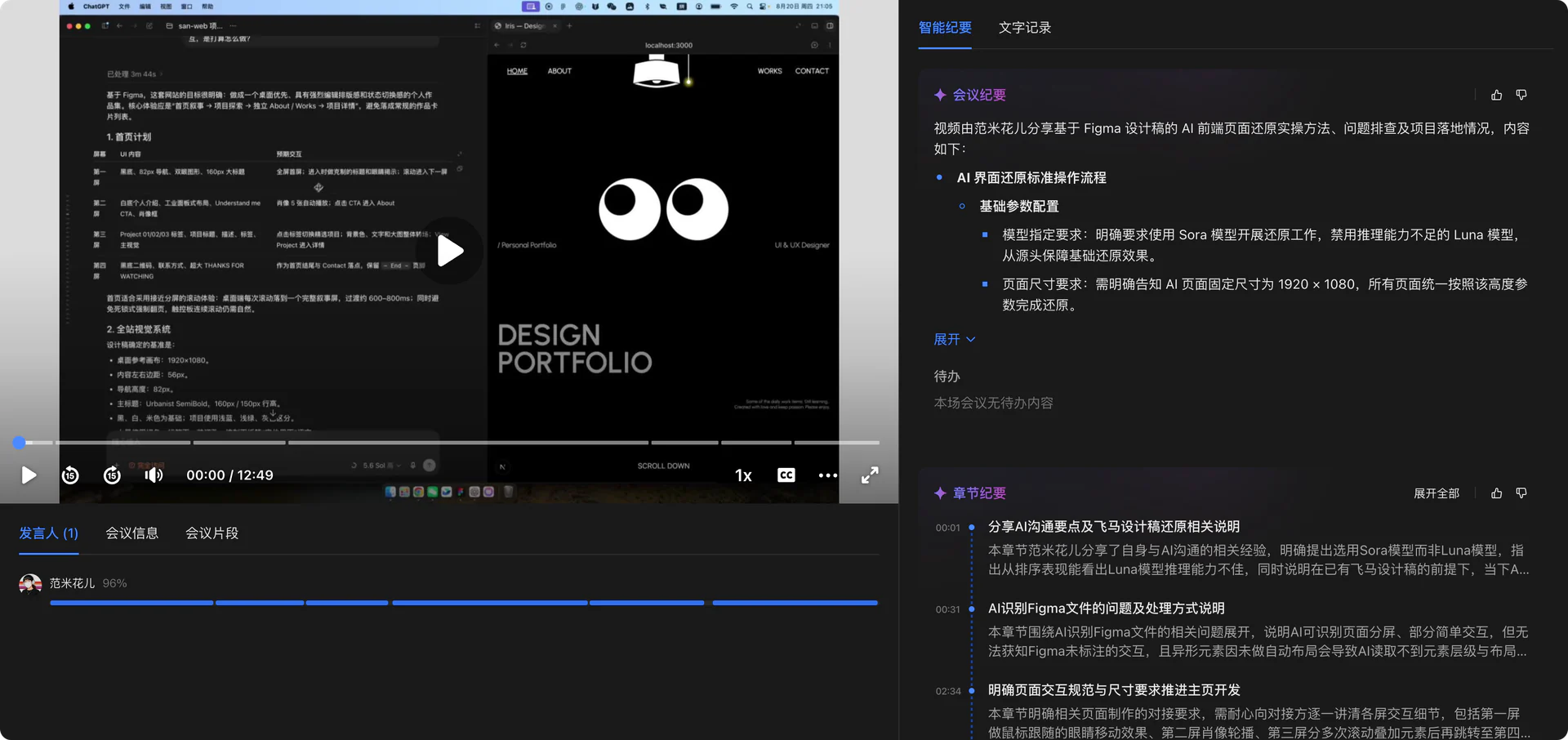
Make the design readable before asking for more code
We reorganized the source around page structure, reusable components, interaction states, and explicit dimensions. Then we defined what AI should inspect first and what should be implemented or verified next.
Use a stronger reasoning model for diagnosis
Instead of repeatedly patching visible errors, we used AI to audit the design and current implementation, explain the mismatch, and turn those findings into a more reliable execution order.
04 | What the designer took away
AI needs more than a finished visual. A structured Figma file, explicit interaction intent, reusable assets, and a readable handoff give it the context required to reproduce the design more faithfully.
The practical shift was to stop repairing one page at a time and first make the design system understandable to both people and AI.